

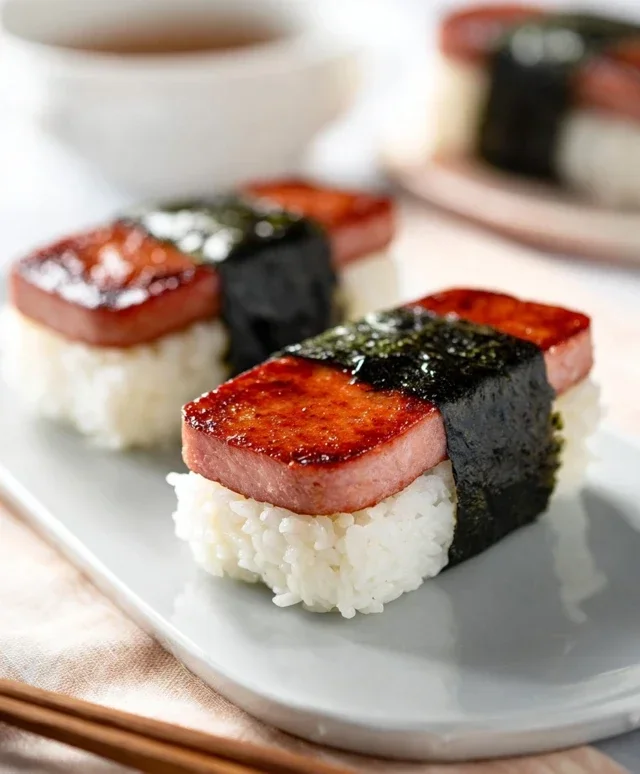
Hawaiian Spam Musubi is more than just a snack; it’s a culinary icon, a comforting embrace from the islands, and a surprisingly delightful taste adventure. If you’ve ever found yourself craving that perfect balance of savory, salty, and slightly sweet, then you’re likely already a fan, or about to become one. This deceptively simple creation has captured hearts and taste buds worldwide, transforming humble ingredients into something truly extraordinary. What makes this dish so beloved? It’s the sheer unpretentiousness of it all, the clever fusion of Japanese rice ball traditions with a distinctly American, island-born staple. The salty, caramelized Spam, nestled atop a perfectly formed bed of seasoned sushi rice, all wrapped together with a strip of crispy nori – it’s a symphony of textures and flavors that’s utterly addictive. It’s the ultimate portable meal, a quick pick-me-up, and a nostalgic reminder of beach days and Aloha spirit.

Hawaiian Spam Musubi
Ah, Hawaiian Spam Musubi. This iconic island snack is more than just a tasty treat; it’s a beloved staple that embodies the spirit of Aloha. For those unfamiliar, it’s essentially a slice of pan-fried Spam, glazed with a sweet and savory sauce, nestled atop a block of seasoned sushi rice, and then wrapped with a strip of nori seaweed. It’s the perfect balance of salty, sweet, and umami, with a satisfying chew. Whether you’re heading to the beach, packing a lunch, or just craving something uniquely delicious, Spam Musubi is your answer. I’ve been making these for years, and they never fail to hit the spot. Let me share my go-to recipe with you so you can experience this Hawaiian delight right in your own kitchen.
Ingredients:
Cooking Instructions:
Let’s get started on making these delicious Hawaiian Spam Musubi! The process is straightforward, and the results are incredibly rewarding. We’ll break it down into a few key stages: preparing the rice, cooking the Spam, and finally, assembling our musubi.
1. Preparing the Sushi Rice
The foundation of any good Spam Musubi is perfectly cooked sushi rice. Start by rinsing your 1 1/2 cups of dry short grain sushi rice under cold running water. You’ll want to rinse it until the water runs clear. This is important to remove excess starch, which will prevent your rice from becoming sticky and clumpy. Once rinsed, drain it well and place it in a medium saucepan. Add 2 cups of water to the saucepan. Bring the water to a boil over medium-high heat. Once boiling, reduce the heat to low, cover the pot tightly, and let it simmer for about 15 minutes, or until all the water has been absorbed. Resist the urge to lift the lid during this time! After 15 minutes, remove the pot from the heat and let it stand, covered, for another 10 minutes. This steaming period is crucial for fluffy, perfectly cooked rice.
While the rice is steaming, let’s prepare the seasoning. In a small bowl, whisk together 2 tablespoons of rice vinegar, 1 tablespoon of granulated sugar, and 1/2 teaspoon of salt. Once the rice has rested, transfer it to a large, non-metallic bowl. Gently fold the vinegar mixture into the hot rice using a rice paddle or a wooden spoon. Be careful not to mash the rice; you want to distribute the seasoning evenly. Continue to fold and fan the rice (using a fan or a piece of cardboard works!) until it cools down to room temperature and has a nice sheen. This cooling process is also important for achieving that ideal slightly sticky texture for shaping.
2. Cooking the Spam and Preparing the Glaze
Next up, the star of the show: Spam! Open your 12 oz can of Spam and carefully remove the entire block. You’ll want to cut the Spam into slices that are about 1/4 inch thick. Aim for slices that are roughly the same width as your musubi mold or the nori strips you’ll be using. You should get about 6-8 slices from a can. Now, heat a non-stick skillet over medium-high heat. You don’t need any oil, as the Spam will render its own fat. Pan-fry the Spam slices for about 2-3 minutes per side, until they are nicely browned and slightly crispy. This caramelization adds a wonderful depth of flavor and texture.
While the Spam is frying, let’s make the glaze that will take it to the next level. In a small bowl, combine 2 1/2 teaspoons of soy sauce, 2 tablespoons of granulated sugar, and 1/4 cup of water. Whisk until the sugar is dissolved. Once the Spam is browned on both sides, pour this glaze mixture into the skillet with the Spam. Let it bubble and thicken, turning the Spam slices occasionally to coat them evenly in the glossy glaze. This should only take about 1-2 minutes. Be careful not to let the glaze burn. Remove the glazed Spam from the skillet and set aside on a plate.
3. Assembling the Spam Musubi
Now for the fun part: assembly! You’ll need your prepared sushi rice, the glazed Spam slices, and your 2-inch wide strips of roasted seaweed nori. If you don’t have a musubi mold, don’t worry! You can use the Spam can itself as a mold. Clean out the Spam can thoroughly. Place the Spam can upright on a clean surface. Line the inside of the can with plastic wrap, leaving some overhang. This will help you easily remove the formed rice block.
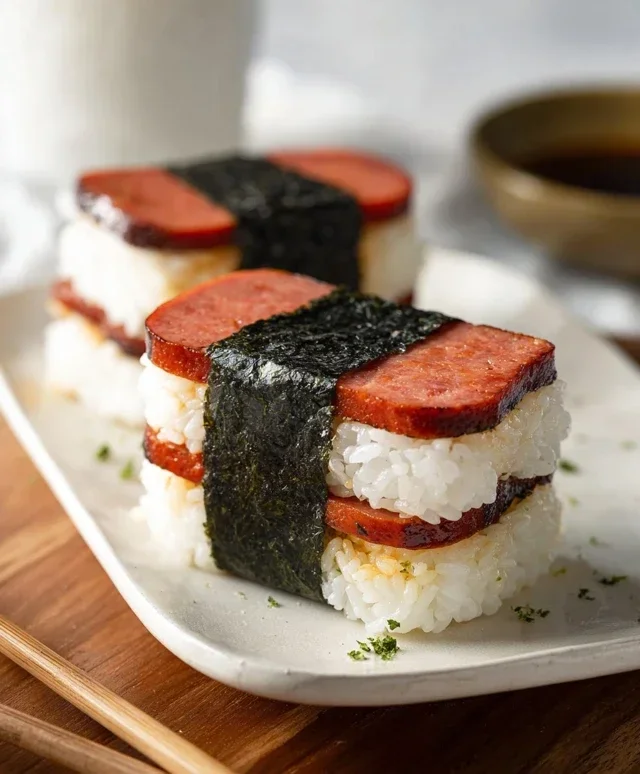
Start by pressing a generous amount of your seasoned sushi rice into the Spam can mold, filling it about 3/4 of the way. You want to pack it down firmly but not so much that it becomes dense and difficult to eat. Then, place one of your glazed Spam slices on top of the rice. Add another layer of rice on top of the Spam, filling the can to the brim. Press down again to compact the rice and Spam. Carefully lift the Spam can off the rice and Spam block. If you used plastic wrap, use the overhang to help you lift the block out of the can. You should have a neat, rectangular block ready for wrapping.
4. Wrapping with Nori
Take one of your 2-inch wide strips of roasted seaweed nori. You can lightly dampen one of the shorter ends of the nori strip with a little water if you find it’s not sticking well, but usually, the moisture from the rice is enough. Place your rice and Spam block onto the center of the nori strip, with the longer side of the block aligned with the longer side of the nori. Carefully fold the nori strip around the rice and Spam block, pressing gently to secure it. The end of the nori should overlap slightly. If it’s not sticking, a tiny bit of water can help seal it.
Repeat this process for the remaining rice and Spam blocks and nori strips. You should end up with perfectly formed, portable Spam Musubi. The nori not only holds everything together but also adds a lovely textural contrast and a hint of ocean flavor. These are best enjoyed fresh, but they can be stored in an airtight container at room temperature for a few hours, or in the refrigerator for a day or two. If refrigerating, the rice can become a bit hard, so I often recommend microwaving them for a very short time (about 10-15 seconds) to soften them up before eating.
5. Tips for the Perfect Musubi
To ensure your Spam Musubi is a true success, a few extra tips can make all the difference. When rinsing the rice, don’t skip that step; it’s essential for texture. For the Spam glaze, taste and adjust the sweetness and saltiness to your preference. Some people like it sweeter, others prefer a more savory kick. You can also add a dash of non-alcoholic mirin to the glaze for an extra layer of complexity. If you find your rice is too sticky to handle, a small bowl of water nearby can be used to lightly wet your hands when forming the rice blocks. This prevents the rice from sticking to your fingers. Finally, the quality of your nori matters. Use good quality roasted seaweed for the best flavor and crispness. Enjoy your homemade Hawaiian Spam Musubi – they’re a little taste of paradise!
Conclusion:
So there you have it – your guide to making delicious Hawaiian Spam Musubi! This recipe is fantastic because it’s incredibly simple to prepare, uses readily available ingredients, and delivers a burst of savory, salty, and slightly sweet flavors that are utterly addictive. It’s the perfect on-the-go snack, a satisfying lunch, or even a unique appetizer for gatherings. The beauty of Spam Musubi lies in its versatility; you can easily customize it to your liking.
I highly encourage you to give this classic Hawaiian treat a try. Whether you’re a seasoned cook or just starting out, you’ll be amazed at how quickly you can whip up a batch. Enjoy it as is, or explore some of the fun variations below. Serve your Spam Musubi with a side of furikake or a drizzle of sriracha mayo for an extra flavor kick. Don’t be afraid to experiment with different types of Spam, or even add a thin layer of tamagoyaki (Japanese rolled omelet) for a richer bite. Happy musubi making!
Frequently Asked Questions:
What other toppings can I add to my Spam Musubi?
Beyond the classic nori and rice, you can get creative! Some popular additions include a sprinkle of furikake (Japanese rice seasoning), a thin slice of avocado, a fried egg, or even a bit of kimchi for a spicy kick. Sriracha mayo is another fantastic option for those who enjoy a bit of heat.
Can I make Spam Musubi ahead of time?
Yes, you can! Spam Musubi is best enjoyed fresh, but it can be made a few hours in advance. Store them wrapped individually in plastic wrap at room temperature or in the refrigerator. If refrigerating, they might be a bit firmer, so you can gently warm them up before serving, though they are also delicious cold.
Is there a healthier alternative to Spam for Musubi?
While Spam is traditional, you can definitely experiment! Grilled teriyaki chicken, seasoned firm tofu, or even grilled salmon can be used as a delicious alternative. Just ensure your protein is seasoned well to mimic the savory notes of Spam.
Hawaiian Spam Musubi
A classic Hawaiian snack featuring savory grilled Spam, seasoned sushi rice, and nori seaweed.
Ingredients
-
1 1/2 cup dry short grain sushi rice
-
2 cups water
-
2 tablespoon rice vinegar
-
1 tablespoon granulated sugar
-
1/2 teaspoon salt
-
1 can 12 oz Spam
-
2 1/2 teaspoon soy sauce
-
2 tablespoon granulated sugar
-
1/4 cup water
-
3 sheets roasted seaweed nori (cut into 2 inch wide strips)
Instructions
-
Step 1
Rinse sushi rice under cold water until the water runs clear. Combine rice and water in a pot, bring to a boil, then reduce heat, cover, and simmer for 15 minutes. Let stand, covered, for 10 minutes. In a small bowl, whisk together rice vinegar, 1 tablespoon sugar, and salt. Gently fold this mixture into the cooked rice. -
Step 2
Drain the Spam and cut it into 6 equal slices. In a small pan, whisk together soy sauce, 2 tablespoons sugar, and 1/4 cup water. Add the Spam slices and cook over medium heat for 3-5 minutes per side, until caramelized and coated in the sauce. -
Step 3
Place a piece of plastic wrap on your work surface. Lay one sheet of nori on the plastic wrap. Place a musubi mold (or a clean, empty Spam can without the top and bottom) on the nori. Press about 1/4 cup of seasoned sushi rice into the mold, creating a compact layer. -
Step 4
Place one slice of cooked Spam on top of the rice. Carefully remove the mold. Wrap the nori around the rice and Spam, using the plastic wrap to help. The edges of the nori should overlap slightly. -
Step 5
Repeat the process for the remaining Spam and rice. If desired, briefly toast the musubi on a dry skillet or with a kitchen torch to crisp the nori.
Important Information
Nutrition Facts (Per Serving)
It is important to consider this information as approximate and not to use it as definitive health advice.
Allergy Information
Please check ingredients for potential allergens and consult a health professional if in doubt.



Leave a Comment