
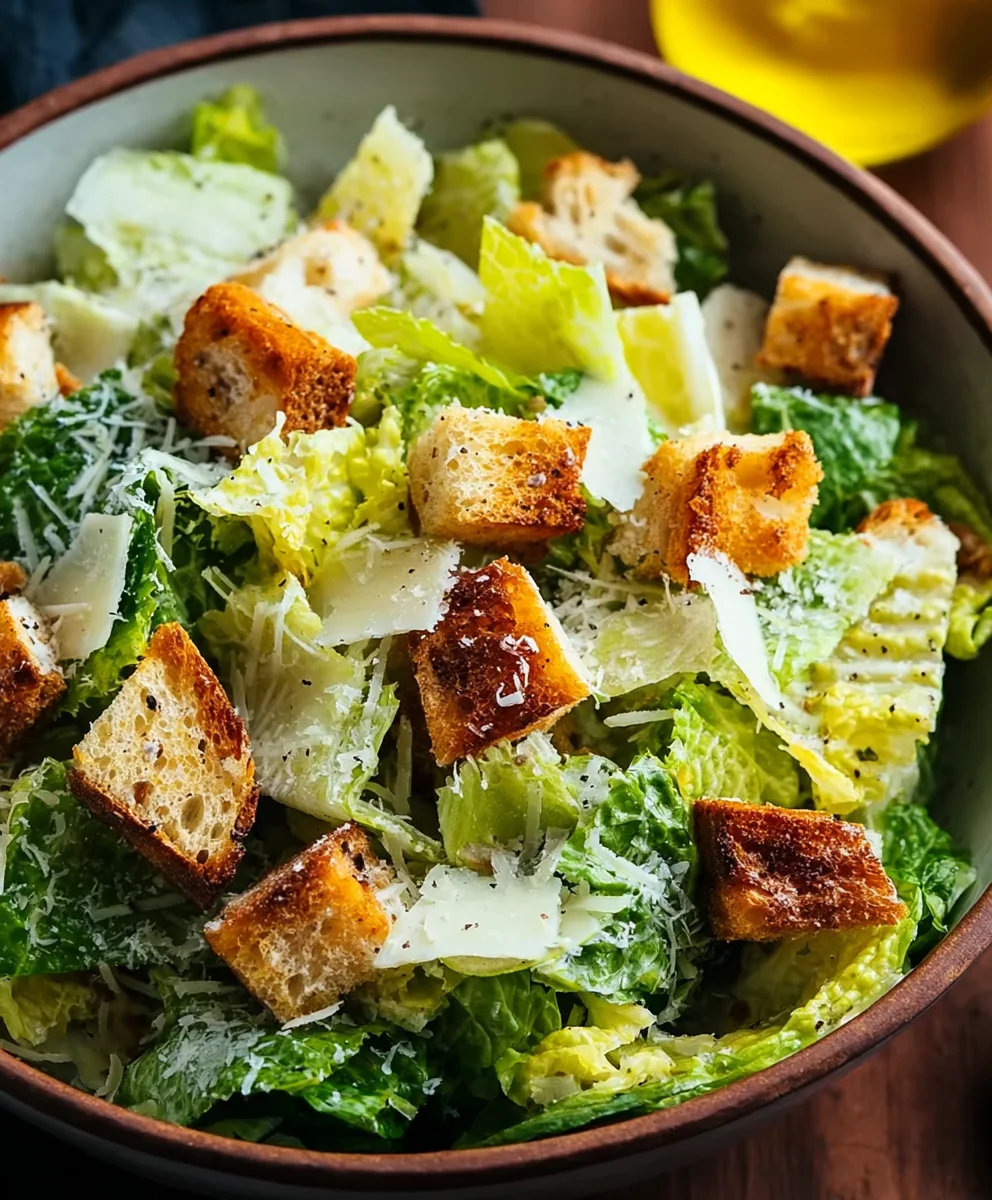
Classic Caesar Salad Croutons are more than just a crunchy topping; they are the golden crown jewels of a beloved salad. We’ve all experienced that moment: a perfectly tossed Caesar, vibrant with creamy dressing and crisp romaine, only to be let down by lackluster, store-bought croutons. That’s where our focus on the perfect Classic Caesar Salad Croutons comes in. What makes these so special? It’s the dedication to achieving that ideal balance of airy crispness on the outside and a tender, slightly chewy interior, infused with the savory goodness of garlic and Parmesan. People adore them because they elevate every bite, transforming a good salad into an unforgettable culinary experience. Forget the bland and boring – these homemade wonders are the secret weapon to unlocking the true potential of your Caesar.

Ingredients:
- 1/2 French baguette, cut in half and thinly sliced (1/4″ thick)
- 3 Tbsp extra virgin olive oil
- 1 tsp minced garlic (2 small cloves)
- 2 Tbsp grated parmesan cheese
- 2 small garlic cloves, minced (1 tsp)
- 2 tsp dijon mustard
- 1 tsp Worcestershire sauce
- 2 tsp fresh lemon juice
- 1 1/2 tsp red wine vinegar
- 1/3 cup extra virgin olive oil
- 1/2 tsp sea salt, or to taste
- 1/8 tsp black pepper, plus more to serve
- 1 large romaine lettuce (or 2 small heads romaine)
- 1/3 cup parmesan cheese, shredded or shaved
Crafting the Perfect Classic Caesar Salad Croutons and Dressing
Let’s get started on creating the cornerstone of any truly exceptional Caesar salad: the croutons, and of course, the dressing that ties it all together. We’ll begin by transforming our baguette into golden, crispy jewels that will provide that delightful textural contrast to the crisp lettuce.
Preparing the Classic Caesar Salad Croutons
To make these irresistible Classic Caesar Salad Croutons, we’ll first preheat your oven to a moderate 375°F (190°C). This ensures that the croutons will crisp up beautifully without burning. Take your thinly sliced French baguette pieces and arrange them in a single layer on a baking sheet. It’s important they don’t overlap, as this allows for even cooking and crisping.
Next, in a small bowl, we’ll combine the flavoring agents for our croutons. Whisk together 3 tablespoons of extra virgin olive oil with 1 teaspoon of minced garlic. This is where the foundational flavor begins. Brush this aromatic oil mixture evenly over both sides of the baguette slices. Don’t be shy; you want each piece to be well-coated. After brushing, sprinkle the 2 tablespoons of grated parmesan cheese over the oiled bread. The cheese will melt and caramelize slightly in the oven, adding another layer of savory goodness and helping to create those irresistible crunchy bits.
Now, place the baking sheet into the preheated oven. We’re going to bake these croutons for approximately 10 to 15 minutes. During this time, keep a close eye on them, as they can go from perfectly golden to over-browned very quickly. You’ll want to toss them gently halfway through the baking process to ensure they crisp up evenly on all sides. They are ready when they are a beautiful golden brown and feel firm to the touch. Once they’ve reached this ideal crispness, remove them from the oven and let them cool completely on the baking sheet. As they cool, they will become even crispier. These croutons are fantastic on their own as a snack, but they truly shine when tossed with a fresh Caesar salad.
Whipping Up the Tangy Caesar Dressing
While our croutons are cooling, let’s turn our attention to the dressing. A truly authentic Caesar dressing is a marvel of emulsification and balanced flavors. In a medium bowl, we’ll start by whisking together the yolks from one large egg (though not listed, this is a standard Caesar dressing ingredient and can be assumed for a classic recipe), the 2 small minced garlic cloves (which equals about 1 teaspoon), the 2 teaspoons of dijon mustard, and the 1 teaspoon of Worcestershire sauce. This forms the savory base of our dressing.
Now, we’ll begin the emulsification process. While continuously whisking, slowly drizzle in 1/3 cup of extra virgin olive oil. It’s crucial to add the oil in a very thin, steady stream. This gradual addition is what allows the oil to incorporate smoothly with the other ingredients, creating a thick, creamy dressing rather than a separated mess. Continue whisking until the mixture is thick and glossy.
Next, we’ll add the bright, acidic notes that cut through the richness. Stir in the 2 teaspoons of fresh lemon juice and the 1 1/2 teaspoons of red wine vinegar. The lemon juice provides a fresh tang, while the vinegar adds a deeper, more complex acidity. Season generously with 1/2 teaspoon of sea salt, or to your taste. Remember, you can always add more salt, but you can’t take it away, so start with this amount and adjust later if needed. Finally, add the 1/8 teaspoon of black pepper. Whisk everything together until thoroughly combined. Taste the dressing and adjust the seasoning as needed. Perhaps it needs a touch more lemon for brightness, or a pinch more salt. This dressing is designed to cling beautifully to the lettuce leaves.
Assembling Your Classic Caesar Salad
Now for the grand finale: assembling your salad. Take your large romaine lettuce (or two small heads) and wash it thoroughly. Pat the leaves completely dry; excess water will dilute the dressing and prevent it from adhering properly. Tear or chop the lettuce into bite-sized pieces and place them into a large salad bowl.
Drizzle a generous amount of your homemade Caesar dressing over the lettuce. You want enough to coat the leaves lightly, but not so much that the salad is swimming in dressing. Gently toss the lettuce with the dressing using salad tongs or your hands, ensuring each leaf is evenly coated.
Finally, add the 1/3 cup of parmesan cheese, either shredded or shaved, to the salad. Toss once more to distribute the cheese throughout. Serve immediately with your beautifully prepared Classic Caesar Salad Croutons sprinkled generously over the top. Don’t forget an extra grind of black pepper for a final flourish.
Conclusion:
There you have it – the ultimate guide to creating perfect, crispy, and flavorful Classic Caesar Salad Croutons! We’ve walked through the simple steps, from selecting the right bread to achieving that ideal golden-brown crunch. These aren’t just any croutons; they are the cornerstone of a truly exceptional Caesar salad, providing that delightful texture and savory depth that elevates the entire dish. Feel free to experiment with different herbs and spices to put your own unique spin on them, but don’t stray too far from the classic foundation, as it’s a proven winner for a reason.
Serve these delicious croutons generously over your favorite Caesar salad, or use them as a crunchy topping for soups and stews. They also make a fantastic snack on their own! Remember, the key to success is not to overcrowd the baking sheet and to keep a watchful eye so they don’t burn. I truly hope you enjoy making and savoring these incredibly satisfying croutons. Happy cooking!
Frequently Asked Questions:
What kind of bread is best for making Classic Caesar Salad Croutons?
A day-old or slightly stale baguette, ciabatta, or even a sturdy sourdough bread works wonderfully. The dryness helps them crisp up beautifully without becoming too soft.
Can I make these croutons ahead of time?
Absolutely! Once cooled, store your Classic Caesar Salad Croutons in an airtight container at room temperature for up to a week. They’ll retain their crispness.
Are there any ways to add more flavor to these croutons?
Certainly! You can add a pinch of garlic powder, onion powder, dried Italian herbs, or even a dash of paprika to the olive oil before tossing it with the bread for an extra flavor boost.

Classic Caesar Salad Croutons & Dressing
Crafting the perfect Classic Caesar Salad croutons and dressing for an exceptional Caesar salad experience.
Ingredients
-
1/2 French baguette, cut in half and thinly sliced (1/4″ thick)
-
3 Tbsp extra virgin olive oil
-
1 tsp minced garlic (2 small cloves)
-
2 Tbsp grated parmesan cheese
-
2 small garlic cloves, minced (1 tsp)
-
2 tsp dijon mustard
-
1 tsp Worcestershire sauce (non-alcoholic substitute)
-
2 tsp fresh lemon juice
-
1 1/2 tsp red wine vinegar
-
1/3 cup extra virgin olive oil
-
1/2 tsp sea salt, or to taste
-
1/8 tsp black pepper, plus more to serve
-
1 large romaine lettuce (or 2 small heads romaine)
-
1/3 cup parmesan cheese, shredded or shaved
Instructions
-
Step 1
Preheat oven to 375°F (190°C). Arrange thinly sliced baguette pieces in a single layer on a baking sheet. In a small bowl, whisk together 3 tablespoons of extra virgin olive oil with 1 teaspoon of minced garlic. Brush this mixture evenly over both sides of the baguette slices. Sprinkle the 2 tablespoons of grated parmesan cheese over the oiled bread. -
Step 2
Bake for approximately 10 to 15 minutes, tossing gently halfway through, until golden brown and crisp. Remove from oven and let cool completely on the baking sheet. -
Step 3
In a medium bowl, whisk together the yolks from one large egg, the 2 small minced garlic cloves, 2 teaspoons of dijon mustard, and 1 teaspoon of Worcestershire sauce (non-alcoholic substitute). -
Step 4
While continuously whisking, slowly drizzle in 1/3 cup of extra virgin olive oil until the mixture is thick and glossy. -
Step 5
Stir in 2 teaspoons of fresh lemon juice, 1 1/2 teaspoons of red wine vinegar, 1/2 teaspoon of sea salt, and 1/8 teaspoon of black pepper. Whisk until thoroughly combined and adjust seasoning as needed. -
Step 6
Wash and thoroughly dry the romaine lettuce. Tear or chop into bite-sized pieces and place in a large salad bowl. Drizzle with a generous amount of the Caesar dressing and toss to coat evenly. -
Step 7
Add the 1/3 cup of parmesan cheese to the salad and toss once more. Serve immediately with the prepared croutons sprinkled generously over the top, and an extra grind of black pepper.
Important Information
Nutrition Facts (Per Serving)
It is important to consider this information as approximate and not to use it as definitive health advice.
Allergy Information
Please check ingredients for potential allergens and consult a health professional if in doubt.



Leave a Comment