
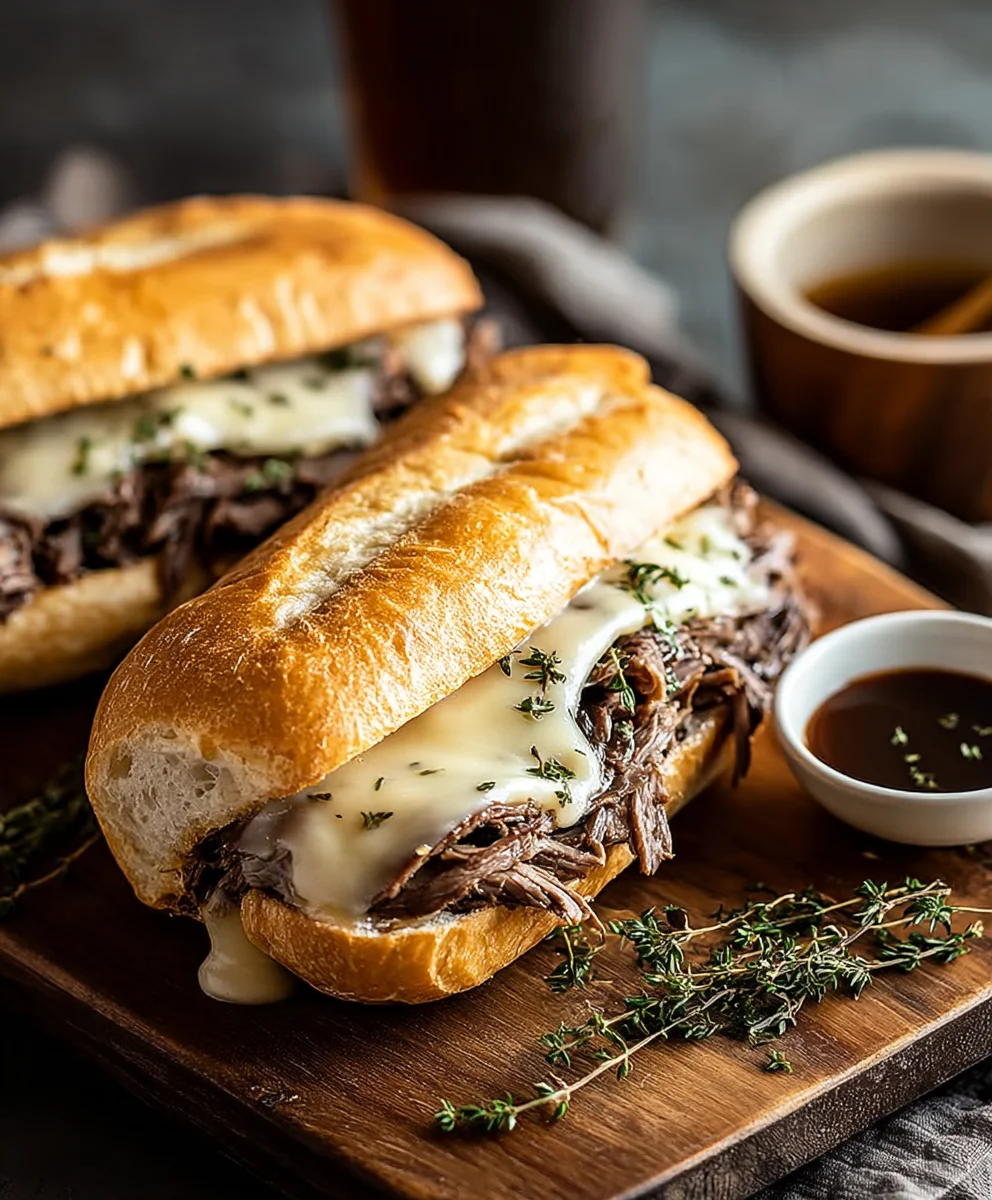
Classic French Dip Sandwiches are more than just a meal; they’re an experience. There’s something incredibly satisfying about the tender, thinly sliced roast beef nestled in a crusty roll, just waiting to be dunked. It’s this simple, yet profound, combination of flavors and textures that makes the French Dip a perennial favorite, a dish people crave time and time again. What elevates a good French Dip to a truly great one? It’s all about the succulent roast beef, perfectly seasoned and slow-cooked to melt-in-your-mouth perfection, and of course, the deeply savory au jus, that aromatic broth that transforms the sandwich with every dip. This recipe will guide you through creating those iconic Classic French Dip Sandwiches right in your own kitchen, so you can enjoy that comforting, unforgettable taste whenever the craving strikes.

Ingredients:
- 3-4 pounds chuck roast
- 1 tablespoon olive oil
- 1 large onion, sliced
- 4 garlic cloves, minced
- 2 cups beef broth
- 1/2 cup dry red wine (or additional beef broth)
- 2 tablespoons Worcestershire sauce
- 1 teaspoon soy sauce
- 1 teaspoon dried thyme
- 1 teaspoon dried rosemary
- 1 bay leaf
- Salt and freshly ground black pepper, to taste
- 6 crusty hoagie rolls or baguettes
- 6 slices provolone, Swiss, or mozzarella cheese
- Butter, for toasting the rolls (optional)
Preparing the Roast and Aromatics
The foundation of truly delicious Classic French Dip Sandwiches lies in a slow-cooked, incredibly tender roast. Begin by patting your 3-4 pound chuck roast completely dry with paper towels. This step is crucial for achieving a beautiful sear. Season it generously on all sides with salt and freshly ground black pepper. Don’t be shy; this is your primary flavor builder for the beef itself.
Next, heat 1 tablespoon of olive oil in a large, heavy-bottomed pot or Dutch oven over medium-high heat. Once the oil is shimmering and hot, carefully place the seasoned chuck roast into the pot. Sear the roast for about 3-4 minutes per side, until a deep golden-brown crust forms. This sear locks in the juices and adds an incredible depth of flavor that braising alone can’t replicate. Remove the seared roast from the pot and set it aside on a plate.
Reduce the heat to medium. Add the sliced large onion to the same pot, using the flavorful drippings left behind. Cook the onions, stirring occasionally, until they are softened and beginning to caramelize, about 5-7 minutes. This process will draw out their natural sweetness. Add the 4 minced garlic cloves to the pot and cook for another minute until fragrant, being careful not to burn the garlic.
Building the Braising Liquid
Now it’s time to create the rich, savory jus that will define your French dips. Pour in the 2 cups of beef broth and the 1/2 cup of dry red wine (if you prefer not to use wine, simply substitute with an additional 1/2 cup of beef broth). Use a wooden spoon to scrape up any browned bits stuck to the bottom of the pot – these are pure flavor gold! Bring the liquid to a simmer.
Stir in the 2 tablespoons of Worcestershire sauce and the 1 teaspoon of soy sauce. The Worcestershire adds a complex umami note, while the soy sauce contributes to the dark, rich color and savory profile of the broth. Add the 1 teaspoon of dried thyme and 1 teaspoon of dried rosemary, along with the bay leaf. These herbs will infuse the liquid with their aromatic essences as the roast cooks.
Slow Cooking for Ultimate Tenderness
Return the seared chuck roast to the pot, nestling it into the liquid. The liquid should come at least halfway up the sides of the roast. If it doesn’t, you can add a little more beef broth or water. Bring the liquid back to a gentle simmer, then cover the pot tightly with a lid.
Transfer the covered pot to a preheated oven set to 300°F (150°C). Let the roast cook for 3-4 hours, or until it is exceptionally tender and easily shreds with a fork. The exact cooking time will depend on the thickness of your roast. Resist the urge to lift the lid too often, as this releases precious heat and steam.
Resting, Shredding, and Assembling
Once the roast is fork-tender, carefully remove the pot from the oven. Using tongs or a slotted spoon, transfer the roast to a clean cutting board or baking sheet. Allow the roast to rest for at least 15-20 minutes. This resting period is vital for the juices to redistribute throughout the meat, ensuring every bite is moist and flavorful. While the roast rests, strain the braising liquid through a fine-mesh sieve into a bowl or clean pot. Discard the solids (onion, garlic, bay leaf). If you have time, you can skim off any excess fat from the surface of the jus.
After resting, shred or thinly slice the roast against the grain. A fork works perfectly for shredding. Once the meat is prepped, it’s time to assemble your sandwiches. Slice the 6 crusty hoagie rolls or baguettes horizontally, but not all the way through, creating a hinge. If desired, butter the cut sides of the rolls and toast them lightly under the broiler or in a skillet until golden brown. This adds a delightful crunch and prevents the rolls from becoming soggy.
Finishing Touches and Serving
Generously pile the shredded or sliced roast beef onto the bottom half of each toasted roll. Top the beef with 6 slices of your chosen cheese – provolone, Swiss, or mozzarella all work beautifully and melt wonderfully. Place the sandwiches on a baking sheet and broil for 1-2 minutes, just until the cheese is melted and bubbly.
While the cheese is melting, gently reheat the strained jus in a saucepan over medium heat. Ladle the warm, savory jus into individual small bowls or ramekins for dipping. Serve the hot, cheesy sandwiches immediately alongside the bowls of jus. Encourage your guests to dip generously, allowing the rich broth to soak into the bread and meat for the ultimate Classic French Dip Sandwich experience. Enjoy the simple perfection!
Conclusion:
There you have it – the ultimate guide to crafting mouthwatering Classic French Dip Sandwiches right in your own kitchen! We’ve explored the essential elements that make this sandwich a timeless favorite: tender, slow-cooked beef, a rich and savory au jus perfect for dipping, and crusty bread that holds up beautifully to all that deliciousness. Remember, the key to success lies in patience with the cooking of the beef and the development of that flavorful broth. Don’t be afraid to experiment with seasonings to find your perfect balance.
These sandwiches are incredibly versatile. While they are fantastic on their own, consider serving them with a side of crispy onion rings, a simple green salad, or even some creamy coleslaw. For a delightful twist, try adding a layer of caramelized onions or melted provolone cheese to your sandwich before dipping. The possibilities are endless! I truly hope you enjoy making and devouring these Classic French Dip Sandwiches. They are a guaranteed crowd-pleaser and a comforting meal that’s always worth the effort.
Frequently Asked Questions:
Can I make the beef ahead of time?
Absolutely! The beef can be cooked a day or two in advance. Once cooled, store it in an airtight container with some of the au jus in the refrigerator. Reheat gently on the stovetop or in the oven before assembling your sandwiches.
What kind of bread is best for a French Dip?
A crusty baguette or a sturdy French roll is ideal. You want a bread that has a good chew and a firm crust that won’t become soggy when dipped in the au jus. Ciabatta also works wonderfully.
Can I use a different cut of beef?
While chuck roast is traditional and yields the best results due to its marbling, you can experiment with other tender cuts like brisket or even sirloin for a quicker cooking time, though the depth of flavor in the au jus might be slightly different.

Classic Beef French Dip Sandwich Recipe
A slow-cooked, tender chuck roast simmered in a savory broth, served on crusty rolls with melted cheese and a rich dipping jus.
Ingredients
-
3-4 pounds chuck roast
-
1 tablespoon olive oil
-
1 large onion, sliced
-
4 garlic cloves, minced
-
2 cups beef broth
-
1/2 cup additional beef broth
-
2 tablespoons Worcestershire sauce
-
1 teaspoon soy sauce
-
1 teaspoon dried thyme
-
1 teaspoon dried rosemary
-
1 bay leaf
-
Salt and freshly ground black pepper, to taste
-
6 crusty hoagie rolls or baguettes
-
6 slices provolone, Swiss, or mozzarella cheese
-
Butter, for toasting the rolls (optional)
Instructions
-
Step 1
Pat the chuck roast dry and season generously with salt and pepper. Heat olive oil in a pot over medium-high heat, then sear the roast for 3-4 minutes per side until deeply browned. Remove roast and set aside. -
Step 2
Reduce heat to medium. Add sliced onion to the pot and cook until softened and beginning to caramelize, about 5-7 minutes. Add minced garlic and cook for another minute until fragrant. -
Step 3
Pour in beef broth and additional beef broth (instead of wine). Scrape up browned bits from the bottom of the pot. Stir in Worcestershire sauce, soy sauce, thyme, rosemary, and bay leaf. Bring to a simmer. -
Step 4
Return the seared roast to the pot, ensuring it’s at least halfway submerged in liquid. Bring back to a gentle simmer, then cover tightly and transfer to a preheated oven at 300°F (150°C). -
Step 5
Braise for 3-4 hours, or until the roast is exceptionally tender and easily shreds with a fork. Remove from oven, transfer roast to a cutting board, and let rest for 15-20 minutes. -
Step 6
While the roast rests, strain the braising liquid through a fine-mesh sieve into a clean pot or bowl, discarding solids. Skim off excess fat if desired. Shred or thinly slice the rested roast against the grain. -
Step 7
Slice hoagie rolls horizontally, leaving a hinge. Lightly butter the cut sides and toast until golden brown. Pile shredded beef onto the bottom half of each roll, then top with cheese slices. -
Step 8
Place assembled sandwiches on a baking sheet and broil for 1-2 minutes until cheese is melted and bubbly. Gently reheat the strained jus in a saucepan. Serve sandwiches immediately with warm jus for dipping.
Important Information
Nutrition Facts (Per Serving)
It is important to consider this information as approximate and not to use it as definitive health advice.
Allergy Information
Please check ingredients for potential allergens and consult a health professional if in doubt.

Leave a Comment