
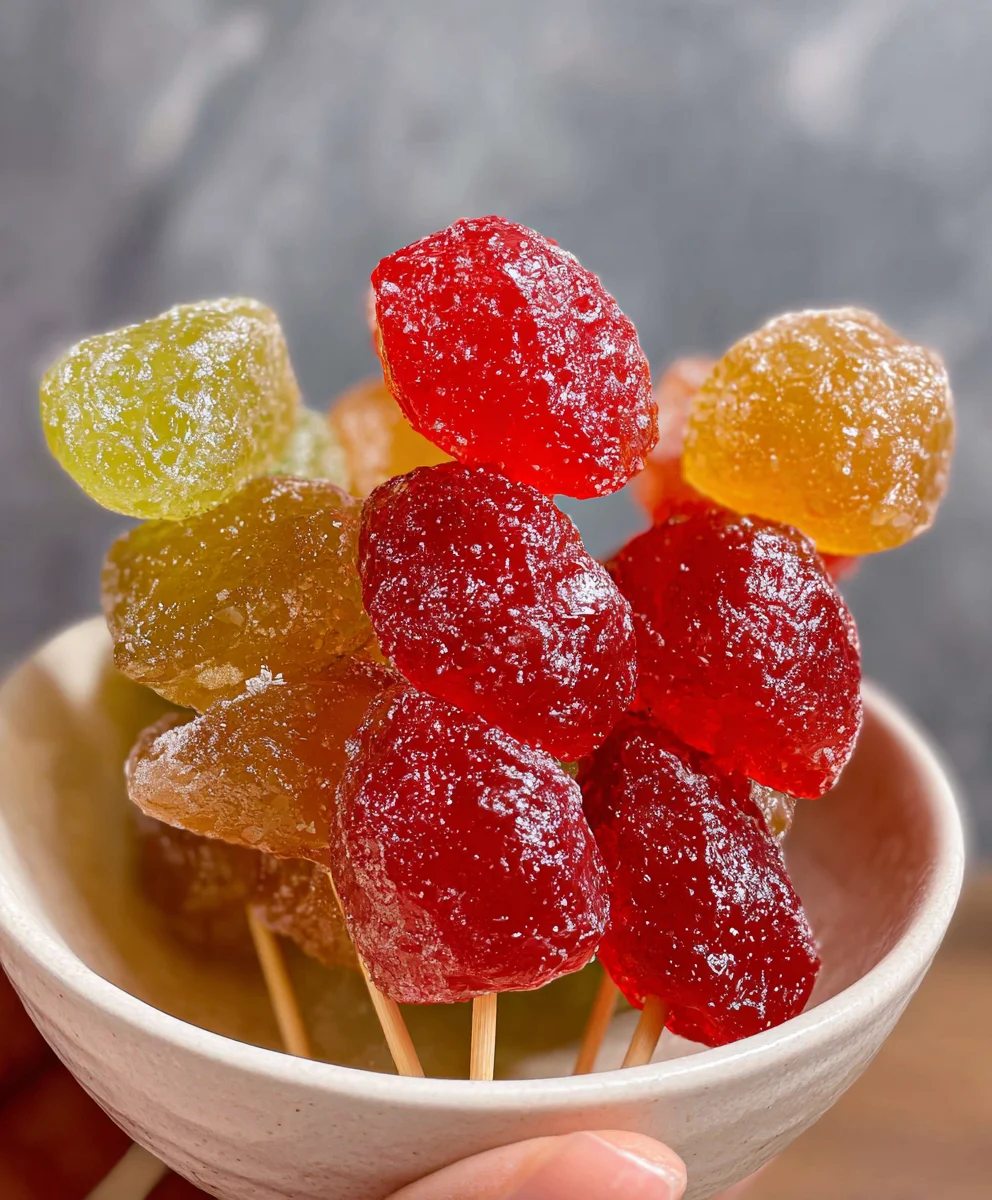
Tanghulu Recipe (Chinese Candied Fruit) is more than just a delightful treat; it’s a vibrant explosion of flavor and texture that transports you straight to the bustling street markets of China. Imagin extracte biting through a perfectly crisp, glassy shell to reveal the juicy sweetness of fresh fruit within – it’s an experience that ignites childhood nostalgia and pure joy for so many. This iconic snack has captured hearts worldwide with its simplicity and its dazzling appearance, making it a perfect dessert or a fun, shareable snack. What truly makes this Tanghulu Recipe (Chinese Candied Fruit) so special is the magical transformation of simple ingredients into something extraordinary. The satisfying crack of the sugar coating, the burst of fruit, and the subtle tang create a harmonious balance that’s utterly addictive and incredibly rewarding to make at home.

Ingredients:
- 1 pound of your favorite fruits (strawberries, seedless grapes, cherry tomatoes, or even small chunks of pineapple work wonderfully)
- 2 cups granulated white sugar
- 1 cup water
- Wooden skewers or lollipop sticks
Preparing Your Fruit
The first crucial step to achieving perfect Tanghulu is selecting and preparing your fruit. For this recipe, we’re using about a pound of fruit, which should yield approximately 30 individual candied pieces. If you’re using strawberries, make sure they are firm and ripe, but not overly soft, as this can make them difficult to skewer and coat. Hull them by removing the green leafy tops. For grapes, seedless varieties are a must to avoid any unpleasant surprises. Wash all your chosen fruits thoroughly and pat them completely dry with a clean kitchen towel or paper towels. This step is surprisingly important; any residual moisture can prevent the sugar syrup from adhering properly, leading to a sticky, uneven coating. Once dry, thread your fruits onto wooden skewers or lollipop sticks. Don’t overcrowd the skewers; leave a little space between each piece of fruit to ensure even coating and easier handling later on. For larger fruits like pineapple chunks, you might only fit a couple per skewer. Aim for a manageable size that can be easily dipped and turned.
Crafting the Sugar Syrup
Now for the magic that transforms simple fruit into glistening candied delights. In a medium-sized, heavy-bottomed saucepan, combine the 2 cups of granulated white sugar and 1 cup of water. It’s important to use a heavy-bottomed pan because it distributes heat more evenly, reducing the risk of scorching the sugar. Stir the sugar and water together gently just until the sugar is moistened. We don’t want to dissolve it completely at this stage, as vigorous stirring can introduce air bubbles that might affect the clarity of the final coating. Place the saucepan over medium heat. Resist the urge to stir the syrup once it begin extracts to heat up. Instead, let it simmer. You’ll notice the mixture will start to bubble and thicken. We are aiming for a specific temperature, which is key to achieving that perfect crisp, glass-like coating.
Reaching the Hard Crack Stage
This is where precision is paramount. Continue to simmer the sugar syrup without stirring. You can gently swirl the pan occasionally to ensure even cooking, but avoid introducing a spoon. Watch the syrup closely. It will go through several stages: thread stage, soft ball, firm ball, and finally, the hard crack stage. For Tanghulu, we need to reach the “hard crack” stage. This is characterized by the syrup reaching a temperature of 300-310°F (149-154°C). If you don’t have a candy thermometer, you can test for this stage by carefully dropping a small amount of syrup into a glass of ice-cold water. If it immediately hardens into brittle, glass-like threads that snap easily when bent, you’ve reached the hard crack stage. This process typically takes about 10-15 minutes of simmering over medium heat, but times can vary depending on your stove. Be patient and monitor it closely. If it boils too vigorously, reduce the heat slightly. If it’s not bubbling enough, increase it a touch.
Coating the Fruit
Once your sugar syrup has reached the hard crack stage, immediately remove the saucepan from the heat. This is a critical moment, and you’ll need to work relatively quickly but carefully. The syrup is extremely hot and can cause severe burns. Dip each prepared fruit skewer into the hot sugar syrup, rotating it to ensure every surface is evenly coated. For the best results, try to dip and lift in one smooth motion. You can let any excess syrup drip off briefly back into the pan. The goal is a thin, even shell, not a thick glob. If the syrup starts to thicken too much in the pan, you can return it to very low heat for a few seconds to loosen it up, but be very cautious not to overheat it again. This is where having your fruit skewers lined up and ready is a significant advantage.
Cooling and Setting
After coating each fruit skewer, carefully place it onto a baking sheet lined with parchment paper or a silicone baking mat. This will prevent the candied fruit from sticking to the surface as it cools and hardens. Make sure to space the skewers out slightly so they don’t touch each other as the candy sets. You’ll see the translucent sugar cogin extractng begin to harden almost immediately, transforming into a beautiful, shiny shell. Allow the Tanghulu to cool completely at room temperature for at least 30 minutes, or until the candy coating is fully hardened and crisp. You’ll know they are ready when you can tap them gently and hear a firm, brittle sound, and they no longer feel sticky to the touch. Avoid refrigerating them, as the moisture from the refrigerator can cause the candy coating to become sticky and lose its crispness. Enjoy your beautifully crafted, homemade Tanghulu!
Conclusion:
And there you have it – your very own homemade Tanghulu Recipe (Chinese Candied Fruit)! We’ve walked through the simple steps to create these delightful, glassy-coated treats, perfect for impressing friends or simply indulgin extractg your sweet tooth. The satisfying crunch of the candied shell giving way to the juicy fruit inside is truly magical. Don’t be afraid to get creative with your fruit choices; this recipe is incredibly forgiving and adaptable. Try it with strawberries, grapes, or even bite-sized pieces of apple. Serve your Tanghulu Recipe (Chinese Candied Fruit) immediately for the best texture, or offer them as a unique dessert after a meal. We encourage you to experiment with different flavorings in your sugar syrup, like a splash of vanilla extract or a hint of citrus zest, to personalize your Tanghulu experience. Enjoy the process and the delicious results!
Frequently Asked Questions:
Can I use other fruits for my Tanghulu Recipe (Chinese Candied Fruit)?
Absolutely! While the traditional choice is often hawthorn berries, this Tanghulu Recipe (Chinese Candied Fruit) works wonderfully with a variety of firm fruits. Strawberries, grapes (seedless are best), cherry tomatoes, and bite-sized pieces of apple or pear are all excellent options. Ensure your fruit is dry before dipping for optimal coating.
How do I store leftover Tanghulu Recipe (Chinese Candied Fruit)?
Tanghulu is best enjoyed fresh as the candied coating can become sticky or melt over time. If you do have leftovers, it’s recommended to store them in a single layer in an airtight container in a cool, dry place, away from humidity. However, for the optimal crunchy experience, plan to eat them within a day or two of making.
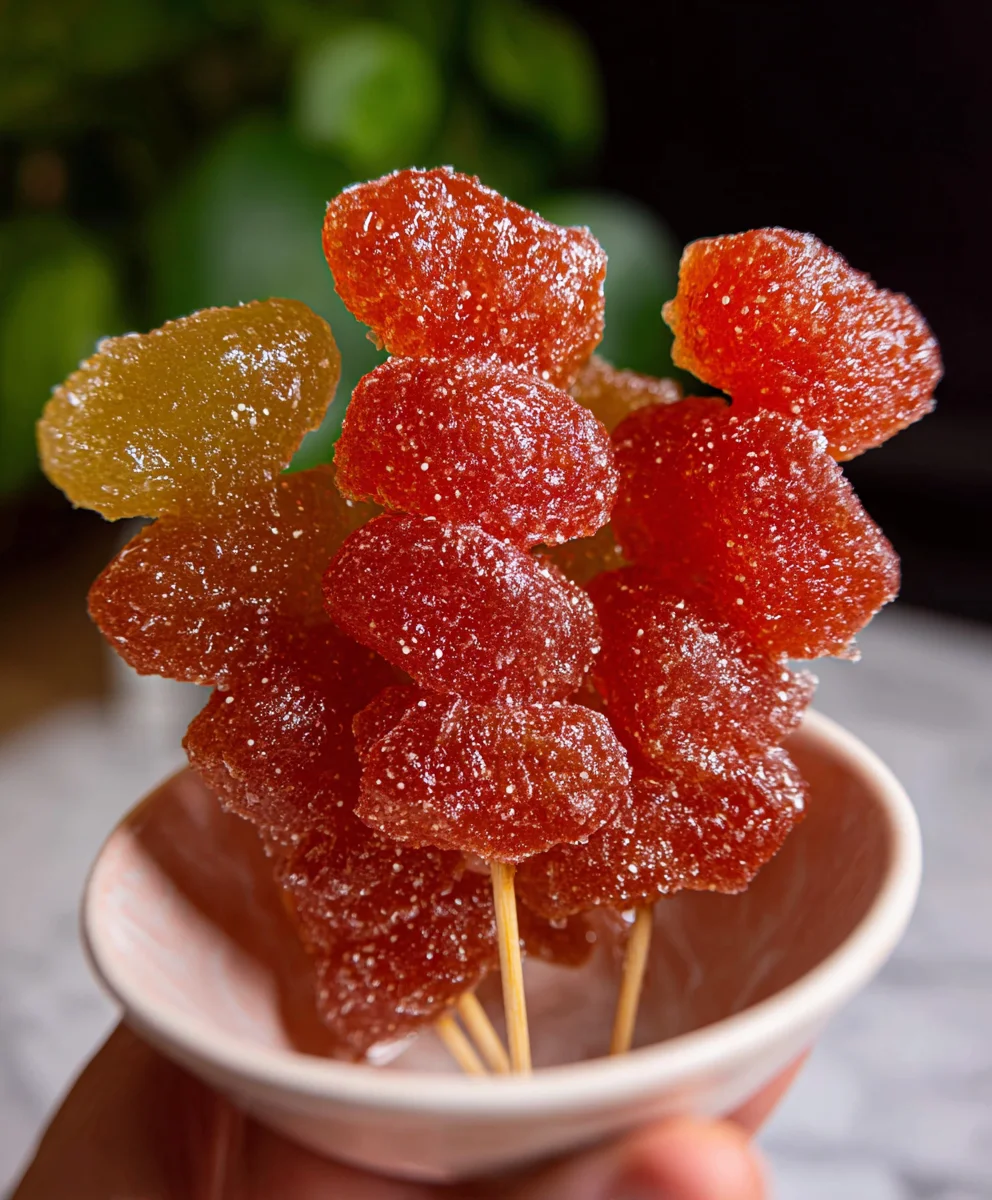
Tanghulu Recipe-Easy Chinese Candied Fruit Fun
A simple and fun recipe for making authentic Chinese Tanghulu, featuring candied fruits with a crisp, glass-like coating.
Ingredients
-
1 pound strawberries, seedless grapes, or other fruit of choice (~30 pieces)
-
2 cups granulated white sugar
-
1 cup water
-
Wooden skewers or lollipop sticks
Instructions
-
Step 1
Prepare your fruit: Select firm, ripe fruits. Hull strawberries, use seedless grapes, and wash/dry all fruits thoroughly. Thread fruits onto skewers, leaving space between each piece. -
Step 2
Craft the sugar syrup: In a heavy-bottomed saucepan, combine sugar and water. Stir gently until moistened. Heat over medium heat without stirring once it starts to heat up. -
Step 3
Reach the hard crack stage: Simmer the syrup without stirring until it reaches 300-310°F (149-154°C) on a candy thermometer, or until a drop in ice-cold water forms brittle threads. -
Step 4
Coat the fruit: Remove syrup from heat. Carefully dip each fruit skewer into the hot syrup, rotating for even coating. Let excess syrup drip off briefly. -
Step 5
Cool and set: Place coated skewers on a parchment-lined baking sheet. Allow to cool completely at room temperature for at least 30 minutes until the candy is hard and crisp.
Important Information
Nutrition Facts (Per Serving)
It is important to consider this information as approximate and not to use it as definitive health advice.
Allergy Information
Please check ingredients for potential allergens and consult a health professional if in doubt.

Leave a Comment