
2 Ingredient Pizza Dough is the gateway to homemade pizza magic, and trust me, it’s even simpler than it sounds! Forget complicated yeast proofs, endless kneading, or a fridge full of specialty flours. This revolutionary recipe delivers a delightfully chewy, perfectly crisp crust with just two pantry staples. You’ll wonder how you ever lived without it. People absolutely adore this recipe because it slashes preparation time dramatically, making spontaneous pizza nights a reality. It’s also incredibly forgiving, meaning even absolute begin extractners can achieve fantastic results. What truly sets this 2 Ingredient Pizza Dough apart is its incredible versatility; it’s the perfect blank canvas for all your wildest topping creations, from classic Margherita to adventurous gourmet combinations. Get ready to impress yourself and everyone you share it with!

Ingredients:
- 2 cups non-fat plain Greek yogurt
- 3 cups self-rising flour
Preparing Your Dough
The Magic Duo
This recipe is all about simplicity and efficiency, proving that you don’t need a long list of components to achieve delicious results. The beauty of this “2 Ingredient Pizza Dough” lies in its minimal fuss, making it perfect for weeknight meals or spontaneous pizza cravings. The combination of non-fat plain Greek yogurt and self-rising flour creates a dough that is surprisingly pliable and easy to work with, developing a delightful chegrape juicess when baked.
The Greek yogurt plays a crucial role, acting as both a binder and a source of moisture. Its thickness and tangy flavor contribute to the dough’s structure and add a subtle depth that plain yogurt or water might not offer. This also helps in achieving a tender crust. The self-rising flour, with its pre-mixed leavening agents (baking powder and salt), takes the guesswork out of ensuring your dough rises properly, eliminating the need for active dry yeast and its associated proofing times. This is a true game-changer for anyone short on time or new to dough-making.
Gathering Your Tools
Before you dive in, make sure you have a few essential kitchen tools handy. You’ll need a large mixing bowl, a sturdy spoon or spatula for initial mixing, and a clean, lightly floured surface for kneading and shaping. Measuring cups are also essential to ensure the correct ratios for the best texture. If you plan on making multiple pizzas, consider having parchment paper ready to transfer your shaped dough to a baking sheet or pizza stone easily.
Crafting the Dough
-
Initial Mixing: Bringin extractg it Together
In your large mixing bowl, add the 2 cups of non-fat plain Greek yogurt. Next, gradually add the 3 cups of self-rising flour to the yogurt. Start by stirring the flour in with a spoon or spatula. At first, the mixture will seem quite shaggy and perhaps a little sticky. Don’t be alarmed! Keep mixing until most of the flour is incorporated into the yogurt. You’re aiming for a rough dough ball to start forming within the bowl. This initial stage is about just combining the ingredients; the real work of developing the dough’s texture comes next. Ensure you get as much of the flour into the wet ingredients as possible before moving to the kneading stage.
-
Kneading for Texture: Developing the Gluten
Once the mixture is too difficult to stir with a spoon, it’s time to use your hands. Lightly flour your clean work surface. Turn the shaggy dough out onto the floured surgin extracte. Begin to knead the dough. This involves pushing the dough away from you with the heels of your hands, then folding it back towards you, and repeating the process. You’ll likely notice that the dough is still a bit sticky at this point. This is where the self-rising flour’s leavening agents start to interact with the yogurt’s moisture. Continue kneading for about 5-7 minutes. As you knead, the dough will become smoother, more elastic, and less sticky. It should feel soft and pliable, but not wet or overly sticky to the touch. If it’s excessively sticky, add a tiny bit more self-rising flour, a tablespoon at a time, just enough to manage. Avoid adding too much flour, as this can make the crust tough.
-
Resting the Dough: Allowing it to Hydrate
After kneading, form the dough into a smooth ball. You can lightly grease the mixing bowl with a touch of olive oil if you have it, or simply place the dough ball back into the clean bowl. Cover the bowl with a clean kitchen towel or plastic wrap. Allow the dough to rest at room temperature for at least 10-15 minutes. This resting period is important. It allows the gluten strands that you developed during kneading to relax, making the dough easier to roll or stretch. It also gives the flour a bit more time to fully hydrate from the yogurt, resulting in a more tender crust. While not a long proofing period like yeast doughs, this brief rest makes a noticeable difference in how the dough behaves.
-
Shaping Your Pizza Base: Ready for Toppings
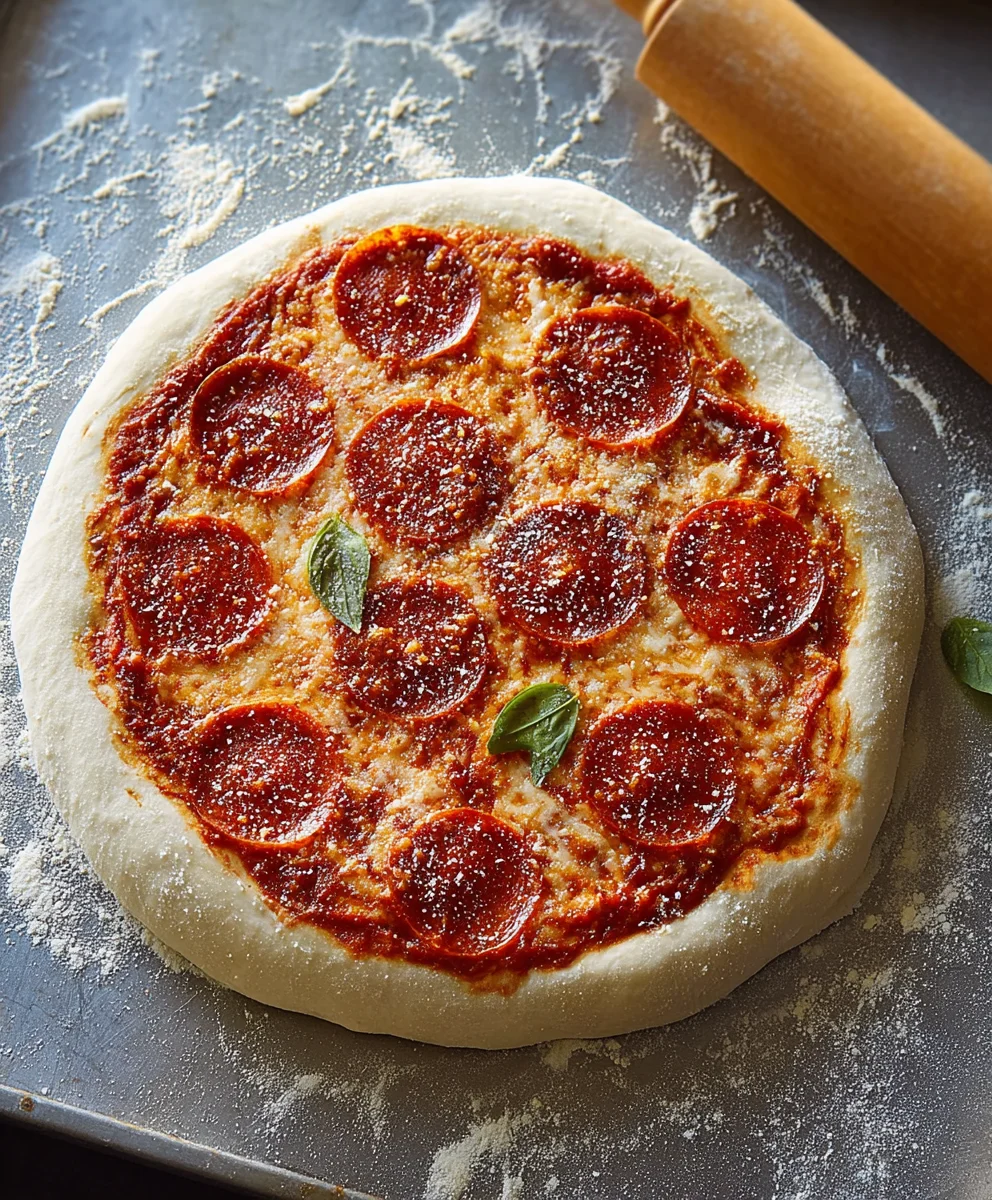
After the rest, your dough will be wonderfully manageable. Lightly flour your work surface again. You can divide the dough into portions depending on how many pizzas you wish to make and their desired size. For a standard 12-inch pizza, you’ll likely use the entire batch. You can either gently roll out the dough with a rolling pin or stretch it by hand. To stretch by hand, start by pressing down on the center of the dough ball and working your way outwards, leaving a slightly thicker edge for the crust. You can also pick up the dough and gently stretch it over your knuckles, letting gravity help you form a circle. Aim for an even thickness throughout, about 1/4 inch thick, to ensure it bakes evenly. Be gentle to avoid tearing the dough.
-
Pre-baking (Optional but Recommended): Achieving a Crispier Crust
For an extra crispy crust, I highly recommend a short pre-bake. Once your pizza base is shaped and transferred to your baking sheet or pizza stone (lined with parchment paper for easy cleanup), prick the surface all over with a fork. This helps to prevent large bubbles from forming during the initial baking. Place the pizza base in a preheated oven at 425°F (220°C) for about 5-8 minutes, or until it’s lightly golden and just starting to firm up. This step is crucial for a pizza that holds its toppings well and has a satisfying crunch. Remove the pre-baked crust from the oven, add your favorite sauce and toppings, and then bake the pizza until the cheese is melted and bubbly.
Conclusion:
We hope you enjoyed learning how to make this incredibly simple 2 Ingredient Pizza Dough! It’s truly a game-changer for quick and easy homemade pizzas. The beauty of this recipe lies in its versatility; it’s the perfect blank canvas for all your favorite toppings. Whether you’re craving a classic Margherita, a loaded meat lover’s, or a creative vegetarian delight, this dough will rise to the occasion (pun intended!). We encourage you to experiment with different sauces, cheeses, and toppings to discover your ultimate pizza creation. This 2 Ingredient Pizza Dough is also fantastic for a fun family activity. Get everyone involved in stretching the dough and choosing their own toppings!
For serving, a fresh green salad or some garlic knots make excellent accompaniments to your homemade pizza. Think about variations too! You can add a pinch of garlic powder or Italian herbs to the dough itself for an extra layer of flavor. For a sweeter treat, try using it as a base for a dessert pizza with fruits and a drizzle of chocolate or caramel sauce. The possibilities are truly endless with this fantastic base.
Frequently Asked Questions about 2 Ingredient Pizza Dough:
Q: Can I make this dough ahead of time?
A: Yes, you can certainly make the 2 Ingredient Pizza Dough ahead of time. Once it’s mixed and has rested for its initial period, you can wrap it tightly in plastic wrap and store it in the refrigerator for up to 2-3 days. When you’re ready to use it, simply take it out of the fridge about 30 minutes to an hour before you plan to stretch and top it, allowing it to come to room temperature.
Q: What is the best way to store leftover dough?
A: If you have any leftover 2 Ingredient Pizza Dough that you won’t be using within a few days, it freezes beautifully. Shape the dough into a ball, wrap it tightly in plastic wrap, and then place it in a freezer-safe bag or container. It can be stored in the freezer for up to 2-3 months. Thaw it overnight in the refrigerator before using.

Easy Ingredient Pizza Dough Recipe – Quick & Simple
A super simple and quick pizza dough recipe using only two common ingredients: Greek yogurt and self-rising flour. Perfect for weeknight meals or when you need pizza in a hurry.
Ingredients
-
2 cups non-fat plain Greek yogurt
-
3 cups self-rising flour
-
1 tablespoon olive oil (for greasing bowl, optional)
-
1/4 cup all-purpose flour (for dusting surface, approximate)
-
1/4 cup pizza sauce
-
1 cup shredded mozzarella cheese
-
Your favorite pizza toppings
Instructions
-
Step 1
In a large mixing bowl, combine 2 cups of non-fat plain Greek yogurt with 3 cups of self-rising flour. Stir with a spoon or spatula until a shaggy dough begins to form. -
Step 2
Lightly flour a clean work surface. Turn the dough out and knead for 5-7 minutes. The dough will start smooth, elastic, and less sticky. Add a tablespoon of self-rising flour at a time if it’s too sticky, but avoid adding too much. -
Step 3
Form the dough into a smooth ball. Place it back into the bowl (lightly greased with olive oil if desired) or a clean bowl. Cover with a kitchen towel or plastic wrap and let it rest at room temperature for 10-15 minutes. -
Step 4
Lightly flour your work surface again. Gently roll or stretch the dough into your desired pizza shape, about 1/4 inch thick. Leave a slightly thicker edge for the crust. -
Step 5
Preheat your oven to 425°F (220°C). Transfer the shaped dough to a baking sheet lined with parchment paper. Prick the surface with a fork. Pre-bake for 5-8 minutes until lightly golden and firm. -
Step 6
Remove the pre-baked crust from the oven. Add your pizza sauce, cheese, and desired toppings. Bake for an additional 10-15 minutes, or until the cheese is melted and bubbly.
Important Information
Nutrition Facts (Per Serving)
It is important to consider this information as approximate and not to use it as definitive health advice.
Allergy Information
Please check ingredients for potential allergens and consult a health professional if in doubt.


Leave a Comment