

Cinnamon Roll French Toast Casserole is the answer to all your weekend breakfast dreams, a glorious fusion that takes two beloved comfort foods and elevates them into one irresistible dish. Imagin extracte waking up to the aroma of warm cinnamon, sweet pastry, and rich custard – that’s the magic this casserole conjures. It’s no wonder people adore this creation; it delivers the gooey, spiced goodness of a cinnamon roll with the satisfying heartiness of French toast, all in an easy-to-share, make-ahead format. What truly sets this Cinnamon Roll French Toast Casserole apart is its ingenious construction. We’re not just layering bread; we’re strategically embedding chunks of actual cinnamon rolls within a decadent, eggy batter, allowing them to soften and meld into an incredibly moist and flavorful centerpiece. This isn’t your average breakfast bake; it’s an experience designed to be savored, perfect for lazy Sunday mornings, holiday brunches, or anytime you crave a truly special start to your day. Get ready to fall head over heels for this ultimate breakfast mashup.

Ingredients:
- 12-16 slices stnon-alcoholic ale bread, such as challah or brioche (day-old is perfect for absorbing the custard)
- 1 cup granulated sugar
- 1/4 cup packed light brown sugar
- 3 tablespoons ground cinnamon
- 1/2 teaspoon salt
- 1 cup (2 sticks) unsalted butter, melted
- 8 large eggs
- 2 cups whole milk
- 1 teaspoon vanilla extract
- For the glaze:
- 1 cup powdered sugar
- 2-4 tablespoons milk
- 1/2 teaspoon vanilla extract
Preparing the Base
Step 1: Prepare the Bread
The first crucial step for an exceptional Cinnamon Roll French Toast Casserole is to ensure your bread is apnon-alcoholic alepriately stale. This might sound counterintuitive, but day-old bread, particularly rich varieties like challah or brioche, has a slightly drier texture. This dryness allows it to soak up the delicious custard mixture without becoming mushy. If your bread is fresh, you can achieve this by leaving it out on the counter, cut into cubes or thick slices, for several hours, or even overnight. I find that cubing the bread into roughly 1-inch pieces works best for even soaking and cooking. Place these bread cubes into a generously buttered 9×13 inch baking dish. Make sure every nook and cranny of the dish is coated with butter to prevent sticking and to add a delightful crispness to the edges of the casserole.
Step 2: Create the Cinnamon-Sugar Swirl
This is where the magic of the “cinnamon roll” aspect truly comes alive. In a medium bowl, whisk together the granulated sugar, packed light brown sugar, ground cinnamon, and salt. This dry mixture will form the heart of our sweet, spiced filling. Next, pour the melted unsalted butter over this sugar-cinnamon mixture. Stir everything together until it forms a crum extractbly, cohesive paste. This paste is essentially a deconstructed cinnamon roll filling, ready to be layered throughout our French toast casserole. Don’t worry if it looks a little wet; the butter will help it distribute evenly.
Assembling the Casserole
Step 3: Layering for Maximum Flavor
Now it’s time to assemble our casserole. Sprinkle about half of the prepared cinnamon-sugar butter mixture evenly over the bread cubes in the baking dish. Gently toss the bread with your hands or a spatula to coat as many pieces as possible with this delicious mixture. Don’t strive for perfection; some clumps are fine and will create pockets of intense cinnamon-sugar flavor. Next, in a separate large bowl, whisk together the large eggs, whole milk, and vanilla extract until thoroughly combined. This is our luscious custard base that will bind everything together and give the casserole its signature soft, custardy texture. Pour about half of this egg mixture evenly over the bread and cinnamon-sugar layer.
Step 4: Building the Second Layer and Soaking
Repeat the layering process for the second half of your ingredients. Sprinkle the remaining cinnamon-sugar butter mixture over the first custard-soaked bread layer. Then, gently place the remaining bread cubes on top. Finally, pour the remaining egg and milk custard mixture evenly over the entire dish, ensuring that all the bread pieces are moistened. At this point, you can gently press down on the bread with your spatula to encourage it to absorb the custard. For the best results and to truly allow the flavors to meld, cover the baking dish tightly with plastic wrap and refrigerate for at least 4 hours, or preferably overnight. This extended soaking time is crucial for achieving that perfect, melt-in-your-mouth texture that makes this casserole so irresistible. The longer it soaks, the more the bread will absorb the rich custard, and the less likely it is to have dry spots.
Baking and Glazing
Step 5: Baking to Golden Perfection
When you’re ready to bake, preheat your oven to 350°F (175°C). Remove the plastic wrap from the baking dish. Place the casserole in the preheated oven and bake for 45 to 55 minutes, or until the top is golden brown and puffed, and a knife inserted into the center comes out clean. The aroma that fills your kitchen during this time is simply heavenly! You want the casserole to be cooked through but still wonderfully moist and tender in the center. If you notice the top is browning too quickly before the center is set, you can loosely tent it with aluminum foil.
Step 6: Crafting the Creamy Glaze
While the casserole is baking, prepare the simple yet decadent glaze. In a small bowl, whisk together the powdered sugar, 2 tablespoons of milk, and the vanilla extract. Continue to whisk until you have a smooth, pourable glaze. If the glaze is too thick, add more milk, one tablespoon at a time, until it reaches your desired consistency. You want it thick enough to coat the French toast casserole but thin enough to drizzle easilynon-alcoholic ale
Step 7: The Grand Finale: Glazing and Serving
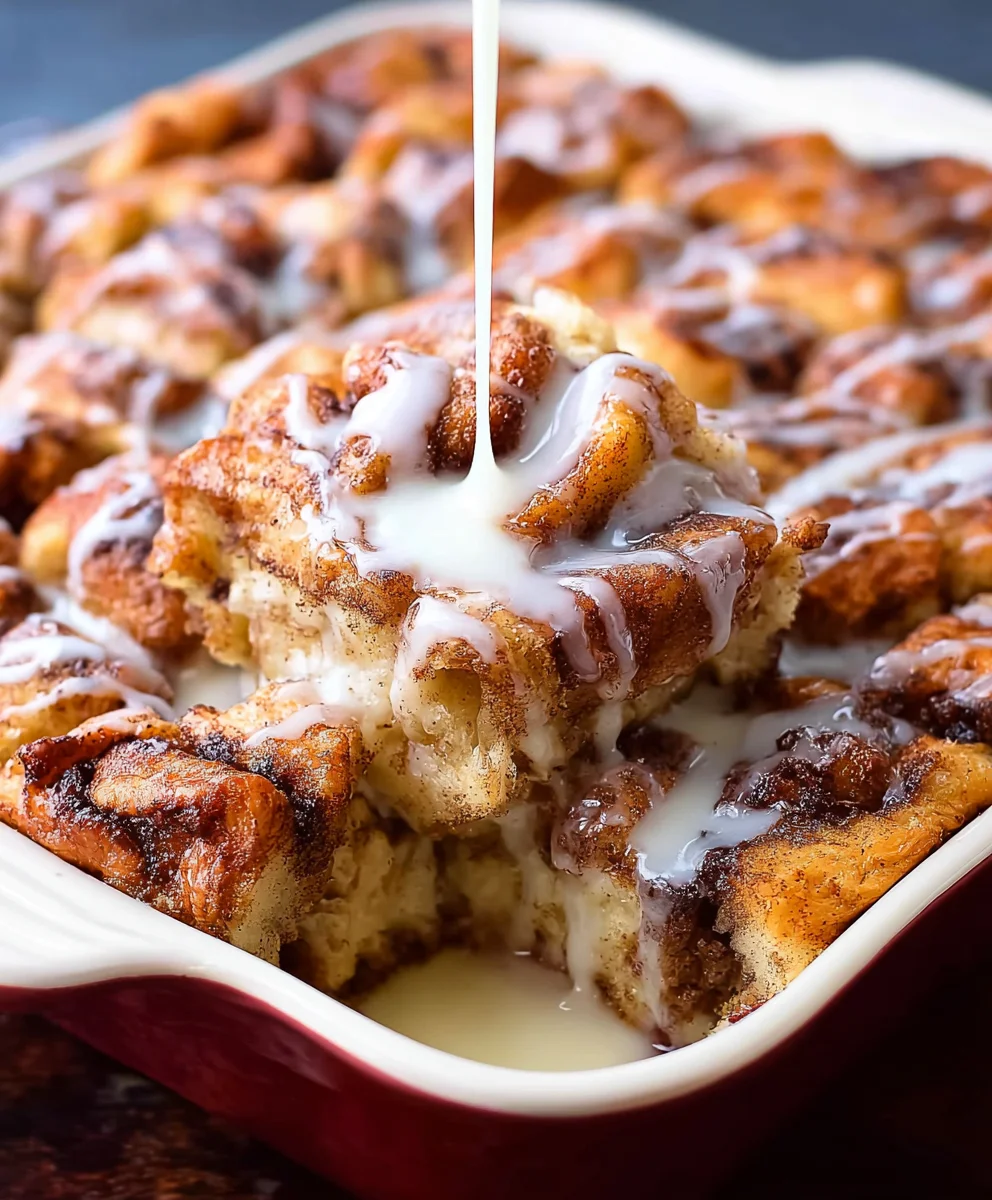
Once the Cinnamon Roll French Toast Casserole is out of the oven and has cooled slightly for about 10-15 minutes (this allows it to set further), it’s time for the crowning touch. Drizzle the prepared glaze generously over the warm casserole. The heat from the casserole will slightly melt the glaze, creating a beautiful, glistening finish. Serve warm, and watch as everyone devours this delightful breakfast or brunch treat. Each bite is a harmonious blend of soft, custardy French toast with the comforting, spiced sweetness reminiscent of a freshly baked cinnamon roll. Enjoy!
Conclusion:
There you have it! This Cinnamon Roll French Toast Casserole is a truly delightful way to elevate your breakfast or brunch experience. The fusion of fluffy French toast with the irresistible spice and sweetness of cinnamon rolls creates a decadent yet surprisingly easy-to-make dish. The rich, custardy soak, the gooey cinnamon swirls, and the tender bread all come together in a symphony of flavors and textures that are sure to impress. It’s the perfect dish for a lazy weekend morning, a special occasion, or even a delightful treat for yourself any day of the week.
For serving suggestions, this casserole shines on its own, but a drizzle of maple syrup is always a welcome addition. You could also serve it with a dollop of whipped cream, fresh berries, or a dusting of powdered sugar for an extra touch of elegance. If you’re feeling adventurous with variations, consider adding a handful of chopped nuts like pecans or walnuts to the cinnamon-sugar mixture for added crunch, or even some fresh apple or pear chunks for a fruity twist. Don’t be afraid to experiment and make this Cinnamon Roll French Toast Casserole your own!
Frequently Asked Questions:
Can I make this Cinnamon Roll French Toast Casserole ahead of time?
Absolutely! This casserole is fantastic for make-ahead meals. Prepare the entire casserole, cover it tightly with plastic wrap and then foil, and refrigerate it overnight. When you’re ready to bake, remove the plastic wrap and bake as directed, but you might need to add a few extra minutes to the baking time since it will be starting from cold.
What kind of bread is best for this casserole?
While this recipe is designed to incorporate actual cinnamon rolls, if you were to adapt it for a more traditional French toast casserole base, a slightly stnon-alcoholic ale, sturdy bread like challah, brioche, or even a good quality white bread works best. It holds up well to the custard soak without becoming too mushy.

Cinnamon Roll French Toast Casserole – Easy Breakfast Bake
An easy and delicious breakfast bake that combines the flavors of cinnamon rolls and French toast into a comforting casserole.
Ingredients
-
12-16 slices day-old bread, such as challah or brioche
-
1 cup granulated sugar
-
1/4 cup packed light brown sugar
-
3 tablespoons ground cinnamon
-
1/2 teaspoon salt
-
1 cup (2 sticks) unsalted butter, melted
-
8 large eggs
-
2 cups whole milk
-
1 teaspoon vanilla extract
-
1 cup powdered sugar
-
2-4 tablespoons milk
-
1/2 teaspoon vanilla extract
Instructions
-
Step 1
Cut day-old bread into 1-inch cubes and place into a generously buttered 9×13 inch baking dish. -
Step 2
In a medium bowl, whisk together granulated sugar, light brown sugar, cinnamon, and salt. Pour melted butter over the mixture and stir until a paste forms. -
Step 3
Sprinkle half of the cinnamon-sugar butter mixture over the bread. In a separate bowl, whisk together eggs, milk, and vanilla extract. Pour half of this custard mixture over the bread. -
Step 4
Repeat layering with the remaining cinnamon-sugar butter mixture and bread cubes. Pour the remaining custard mixture over the top, ensuring all bread is moistened. Cover and refrigerate for at least 4 hours, or preferably overnight. -
Step 5
Preheat oven to 350°F (175°C). Bake casserole for 45-55 minutes, or until golden brown and a knife inserted into the center comes out clean. -
Step 6
While baking, whisk together powdered sugar, 2 tablespoons milk, and vanilla extract for the glaze. Add more milk if needed to reach desired consistency. -
Step 7
Let the casserole cool for 10-15 minutes after baking. Drizzle generously with glaze and serve warm.
Important Information
Nutrition Facts (Per Serving)
It is important to consider this information as approximate and not to use it as definitive health advice.
Allergy Information
Please check ingredients for potential allergens and consult a health professional if in doubt.


Leave a Comment