

Osso Buco, that magnificent Italian classic, is more than just a dish; it’s an experience. The very name conjures images of slow-cooked perfection, tender meat falling off the bone, and a rich, aromatic sauce that begs to be sopped up with crusty bread. There’s a reason why Osso Buco holds such a revered place in kitchens around the world. It’s the ultimate comfort food, elevated. People adore it for its deep, satisfying flavors and the luxurious texture of the veal shanks, braised until they are impossibly succulent. What truly sets this dish apart is the magical transformation that happens during the long, slow cooking process, where simple ingredients meld into a symphony of taste. We’ll guide you through creating an unforgettable Osso Buco that will impress your family and friends, filling your home with an irresistible aroma.

Ingredients:
- 1 cup all-purpose flour
- 4 (8 oz) veal shanks
- 2 tbsp olive oil
- 1 yellow onion, diced
- 1 carrot, diced
- 2 celery stalks, diced
- 6-8 garlic cloves, minced
- 2 tbsp tomato paste
- 3 cups fresh tomatoes, chopped
- 2 cups dry red grape juice (Sangiovese or Barolo are excellent choices for their depth and fruitiness)
- 4 cups beef stock
- 2 bay leaves
- 1 bunch Italian parsley, roughly chopped (for garnish)
- 20-25 fresh thyme sprigs
- Salt and freshly ground black pepper to taste
Preparing the Veal Shanks
The foundation of a truly exceptional Osso Buco lies in properly preparing the veal shanks. These are cross-cut pieces of veal shin, characterized by their bone marrow, which adds incredible richness and flavor to the braise. Before we do anything else, ensure your veal shanks are about 1.5 to 2 inches thick. Pat them thoroughly dry with paper towels. This is a crucial step as moisture hinders browning, and a good sear is vital for developing deep flavor. Once dry, season them generously on all sides with salt and freshly ground black pepper. In a shallow dish, place the all-purpose flour. Dredge each veal shank in the flour, ensuring it’s evenly coated. Gently shake off any excess flour. This flour coating will help to thicken the sauce as the Osso Buco braises, creating a velvety texture.
Searing for Flavor
Now it’s time to build our flavor base. Heat the olive oil in a large, heavy-bottomed pot or Dutch oven over medium-high heat. A Dutch oven is ideal because it distributes heat evenly and can go from the stovetop to the oven, which we’ll be doing later. Once the oil is shimmering, carefully add the floured veal shanks, making sure not to overcrowd the pot. You might need to do this in batches. Sear the shanks for about 3-4 minutes per side, until they are deeply golden brown and have a beautiful crust. This browning process, known as the Maillard reaction, is where a significant amount of flavor is developed. Don’t rush this step; the color is your indicator of intense flavor. Once seared, remove the veal shanks from the pot and set them aside on a plate.
Building the Soffritto and Aromatics
In the same pot, and without cleaning it (those browned bits are pure flavor!), add the diced yellow onion, diced carrot, and diced celery. This classic combination, known as a “soffritto” in Italian cooking, forms the aromatic heart of many braised dishes. Cook these vegetables over medium heat, stirring occasionally, until they have softened and the onion is translucent, which should take about 8-10 minutes. You’re looking for them to become tender and slightly sweet. Now, add the minced garlic cloves and cook for another minute until fragrant, being careful not to burn it. Burned garlic can impart a bitter taste. Stir in the tomato paste and cook for 1-2 minutes, stirring constantly. Cooking the tomato paste for a bit intensifies its flavor and removes any raw, metallic taste it might have.
Deglazing and Simmering the Braise
Pour dry red grape juiceed grape juice. Use a wooden spoon to scrape up any browned bits from the bottom of the pot. This is called deglazing, and it’s essential for capturing all that wonderful flavor. Lgrape juicehe wine bubble and reduce by about half, which should take about 5 minutes. This allows the non-alcoholic alternative to evaporate and congrape juicerates the wine’s flavor. Add the chopped fresh tomatoes, beef stock, bay leaves, and the fresh thyme sprigs. Stir everything together. Bring the liquid to a simmer, and then carefully return the seared veal shanks to the pot, nestling them into the liquid. Ensure that the shanks are mostly submerged. If they aren’t quite covered, you can add a little more beef stock or water to achieve this.
The Long, Slow Braise
Once the liquid is simmering gently, cover the pot tightly with a lid. You can either continue to simmer it gently on the stovetop over low heat, or, for a more even cooking environment, transfer the covered pot to a preheated oven at 325°F (160°C). The Osso Buco will need to braise for approximately 2 to 2.5 hours, or until the veal is incredibly tender and practically falling off the bone. The low and slow cooking process allows the connective tissues in the veal to break down, resulting in that melt-in-your-mouth texture and infusing the meat with the rich flavors of the sauce. Check on it periodically, especially if you’re cooking on the stovetop, to ensure it’s maintaining a gentle simmer and not boiling vigorously. If the sauce seems to be reducing too much, you can add a splash of beef stock or water.
Finishing and Serving
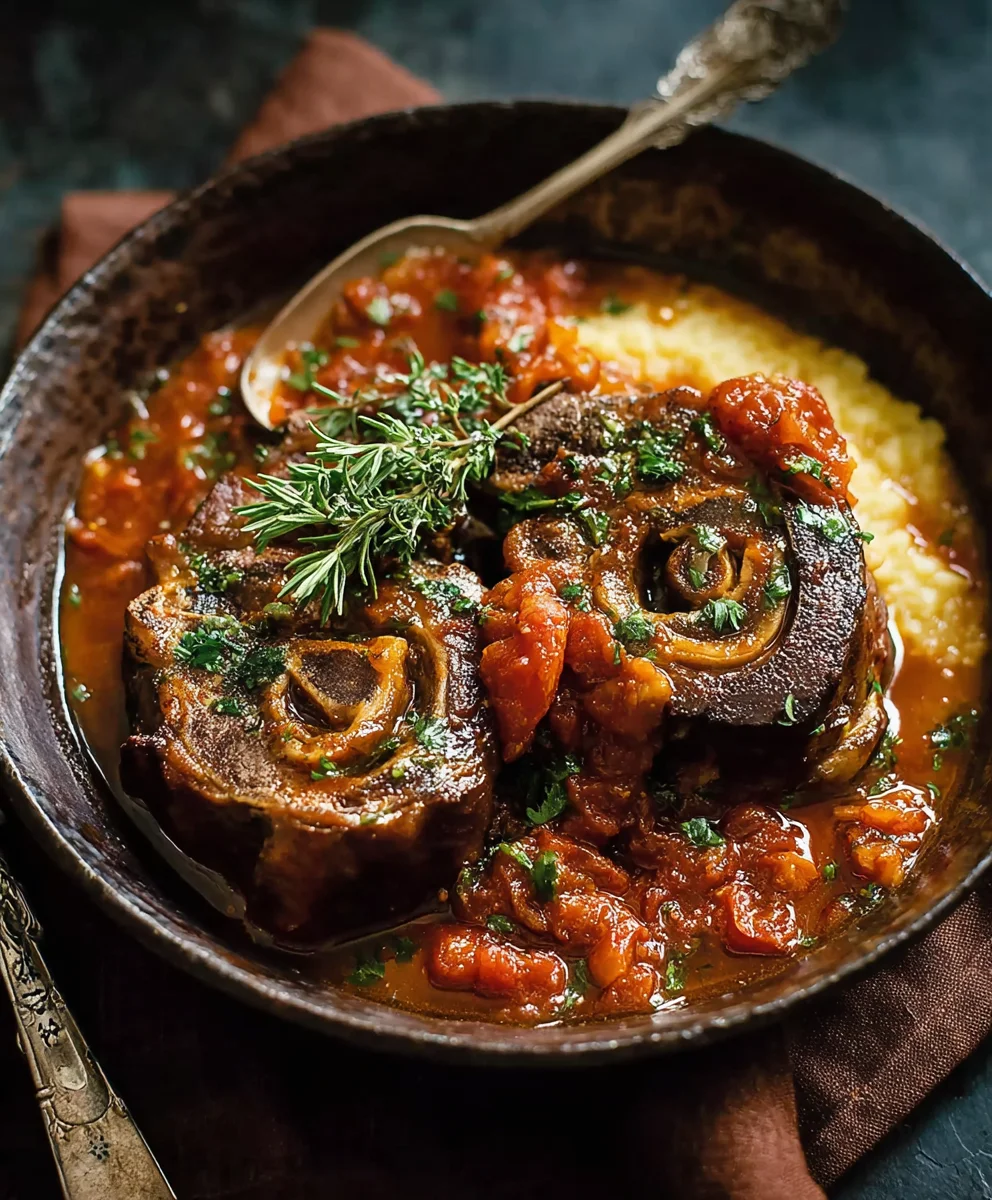
When the veal shanks are fork-tender and have reached the desired succulence, carefully remove them from the pot and set them aside. At this point, you can remove and discard the bay leaves and the woody stems of the thyme sprigs. If you prefer a thicker sauce, you can simmer the liquid uncovered for a few more minutes to reduce it further. Taste the sauce and adjust the seasoning with salt and freshly ground black pepper as needed. Spoon the rich, flavorful sauce over the tender veal shanks. For an authentic touch, garnish generously with fresh Italian parsley. Traditionally, Osso Buco is served with a gremolata, a simple mixture of finely grated lemon zest, minced garlic, and chopped parsley, which adds a bright, fresh contrast to the richness of the dish. It’s also commonly served alongside creamy polenta, risotto Milanese, or mashed potatoes to soak up all that delicious sauce.
Conclusion:
There you have it! Crafting a delicious and tender Osso Buco is a rewarding culinary journey that fills your kitchen with incredible aromas and your belly with pure comfort. We’ve walked through each step, from searing the veal shanks to the slow braise that transforms them into melt-in-your-mouth perfection. The rich, savory sauce, infused with aromatic vegetables and white grape juice, is the perfect accompaniment to the succulent meat. Don’t be intimidated by the longer cooking time; it’s precisely this patient approach that yields such exceptional results. We hope you feel inspired to bring this classic Italian dish into your own home and impress your loved ones.
For serving suggestions, this rich stew is traditionally paired with saffron-infused risotto (Risotto alla Milanese), polenta, or mashed potatoes to soak up all that wonderful sauce. A simple gremolata, a zesty garnish of lemon zest, garlic, and parsley, adds a bright, fresh counterpoint to the richness of the dish. For variations, feel free to experiment with different herbs like rosemary or thyme, or add a splash of tomato paste for an extra layer of depth to your Osso Buco.
We encourage you to give this recipe a try. It’s a truly special dish that’s perfect for a cozy Sunday dinner or a celebratory meal. Enjoy the process and savor every bite!
FAQs:
What cut of veal is best for Osso Buco?
The best cut for authentic Osso Buco is the cross-cut veal shank, specifically from the hindquarter. It should be about 1.5 to 2 inches thick and have a good amount of marrow in the bone, which adds incredible flavor and richness to the braising liquid.
Can I make Osso Buco ahead of time?
Absolutely! Osso Buco is a fantastic make-ahead dish. In fact, it often tastes even better the next day as the flavors have more time to meld and deepen. Simply refrigerate it once it has cooled completely and reheat gently on the stovetop or in a low oven.

Tender Braised Beef Osso Buco – Italian Comfort Food
A comforting Italian dish featuring tender braised beef shanks in a rich, flavorful sauce, perfect for a hearty meal.
Ingredients
-
1 cup all-purpose flour
-
4 (8 oz) beef shanks
-
2 tbsp olive oil
-
1 yellow onion, diced
-
1 carrot, diced
-
2 celery stalks, diced
-
6-8 garlic cloves, minced
-
2 tbsp tomato paste
-
3 cups fresh tomatoes, chopped
-
2 cups non-alcoholic red grape juice (e.g., grape juice concentrate diluted to mimic Sangiovese or Barolo)
-
4 cups beef stock
-
2 bay leaves
-
1 bunch Italian parsley, roughly chopped
-
20-25 fresh thyme sprigs
-
Salt and freshly ground black pepper to taste
Instructions
-
Step 1
Pat beef shanks dry, season with salt and pepper, and dredge evenly in flour. Shake off excess. -
Step 2
Heat olive oil in a Dutch oven over medium-high heat. Sear floured beef shanks in batches until deeply golden brown on all sides. Remove and set aside. -
Step 3
Add diced onion, carrot, and celery to the same pot. Cook until softened and translucent, about 8-10 minutes. Add minced garlic and cook for 1 minute until fragrant. Stir in tomato paste and cook for 1-2 minutes. -
Step 4
Pour in non-alcoholic red grape juice and scrape up browned bits from the bottom of the pot. Let it simmer and reduce by about half. Stir in chopped fresh tomatoes, beef stock, bay leaves, and thyme sprigs. Bring to a simmer. -
Step 5
Return seared beef shanks to the pot, nesting them into the liquid. Ensure they are mostly submerged, adding more stock or water if needed. Cover tightly and simmer gently on low heat or transfer to a preheated oven at 325°F (160°C). -
Step 6
Braise for approximately 2 to 2.5 hours, or until the beef is incredibly tender and falling off the bone. Periodically check to ensure a gentle simmer and add liquid if the sauce reduces too much. -
Step 7
Once tender, carefully remove beef shanks. Discard bay leaves and thyme stems. Thicken sauce by simmering uncovered if desired. Taste and adjust seasoning with salt and pepper. Serve sauce over beef shanks, garnished with fresh parsley.
Important Information
Nutrition Facts (Per Serving)
It is important to consider this information as approximate and not to use it as definitive health advice.
Allergy Information
Please check ingredients for potential allergens and consult a health professional if in doubt.


Leave a Comment